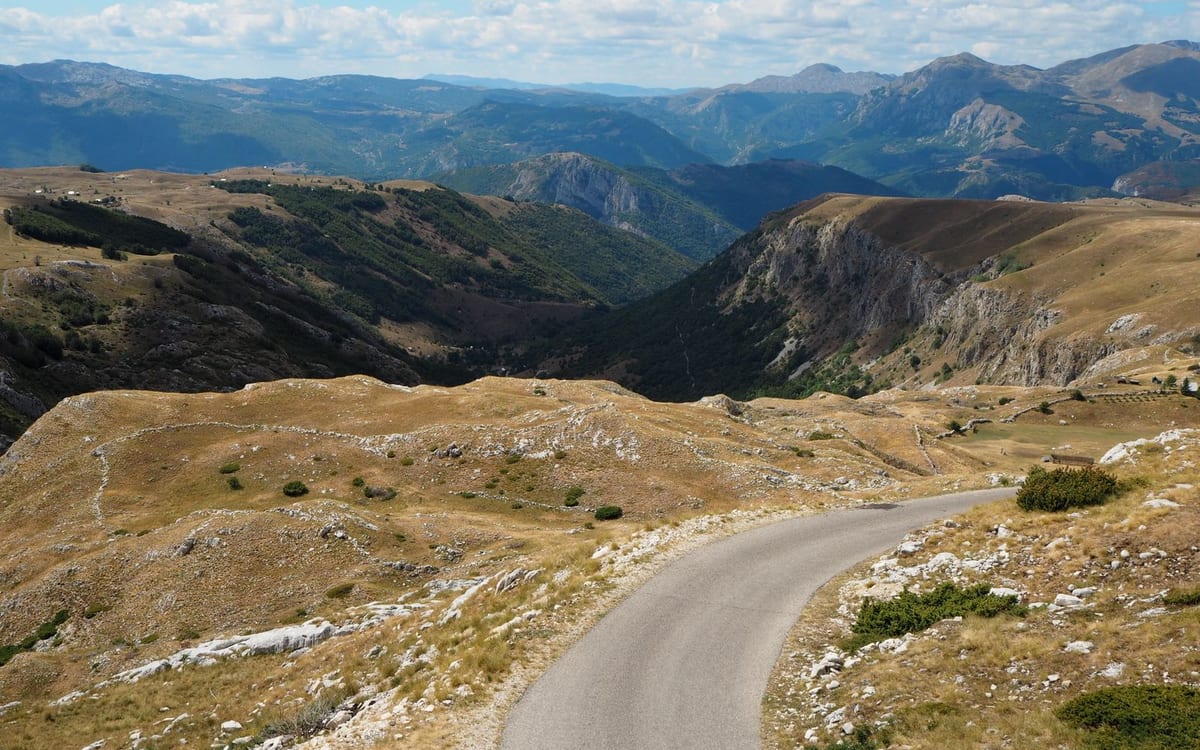
Why see Montenegro by rental car
Montenegro is roughly the size of Northern Ireland yet contains a coast, a deep fjord-like bay, a 2,500-year-old walled town, a 1,300-metre-deep canyon, and alpine peaks above 2,500 metres. Driving distances look short on a map. In practice, the roads twist, climb, tunnel, and ferry-cross their way between these extremes, and journey times rarely match what GPS predicts. Accept that, and the driving itself becomes part of the holiday. It is also why a rental car of your own, rather than tours or transfers, is the way to see the country at your own pace.
Kotor sits at the geographical heart of the action. Perast is fifteen minutes north. Budva is thirty minutes south. Lovcen's summit is an hour of switchbacks above. Lake Skadar is ninety minutes inland. Only Durmitor, in the far north, requires a genuine road trip. Everything else radiates outward from the fortress ramparts like spokes from a hub. Pick up your rental in Kotor and every one of those drives is on your doorstep; check live Kotor car rental prices for your dates.
Cars that handle these roads
Driving around the Bay of Kotor
The bay is a single ribbon of road wrapped around the water, and for most of its length it is a two-lane coastal route that runs straight through the old waterfront towns. Through Dobrota, Perast and Risan it narrows to little more than a car's width in places, stone wall on one side and a drop to the water on the other, with parked cars and pedestrians everywhere in summer. None of it is hard, but it rewards a slow pace: read the road ahead, use the passing bays, and do not expect to average much more than 40 km/h around the inner bay.
The shortcut worth knowing is the Verige strait, the narrowest point of the bay between Kamenari and Lepetane, where a car ferry crosses rather than driving the full loop around the western arm (more on that below). The bay road is at its most beautiful, and its busiest, in the couple of hours after a cruise ship docks in Kotor, so time your departures around that when you can.
The Kotor to Lovcen serpentine
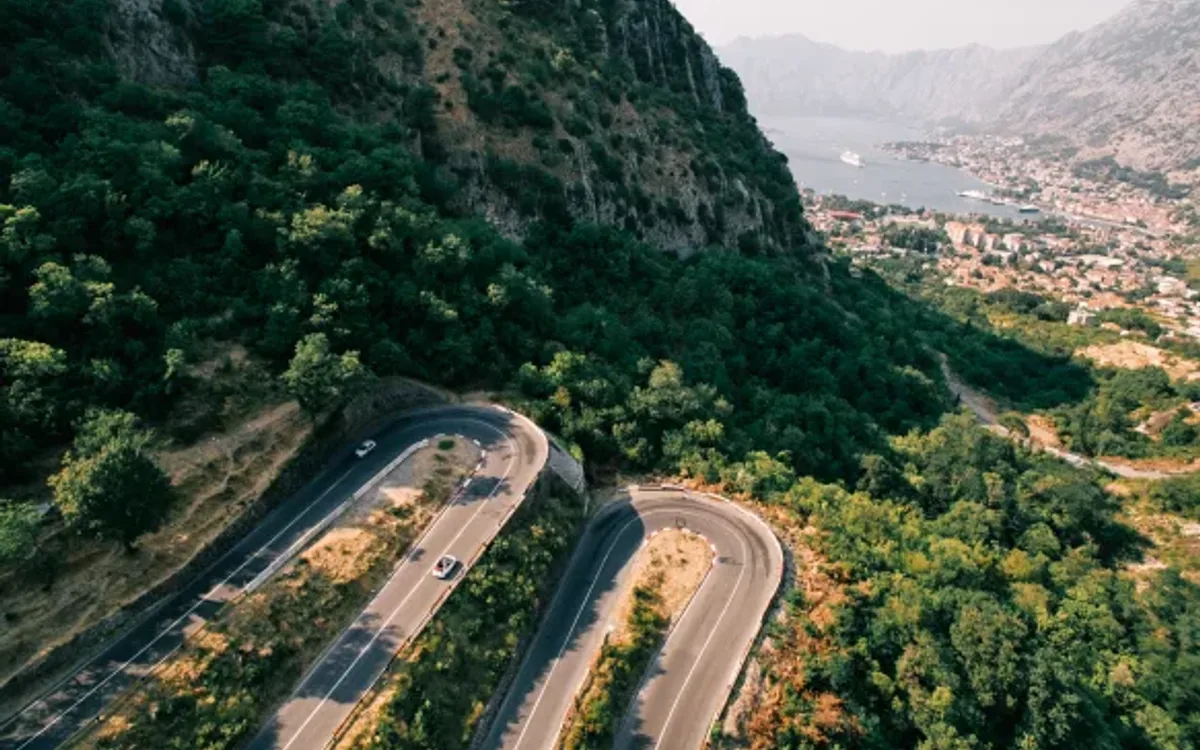
The most famous drive in the country starts at the edge of Kotor: the old road up to the Lovcen plateau, a staircase of around 25 numbered hairpins stacked on the mountain wall directly above the town. Each turn opens the view a little wider until the whole bay lies beneath you, the Old Town a terracotta speck at the water's edge. It is the photograph everyone comes home with.
It is also a road to respect. The lower hairpins are narrow, unguarded in places and single-track at the tightest bends, so you will meet oncoming cars and the occasional tour bus that needs the whole width. Take it slowly, sound the horn on blind corners, pull into the widenings to let locals past, and avoid the midday tour-bus rush or driving it after dark. Any car in our rental car fleet manages it comfortably in low gears; you do not need a 4x4. If the hairpins sound like too much, there is a gentler way up towards Cetinje and Lovcen, though you would be missing the point.
Where you can't drive: Kotor Old Town and parking
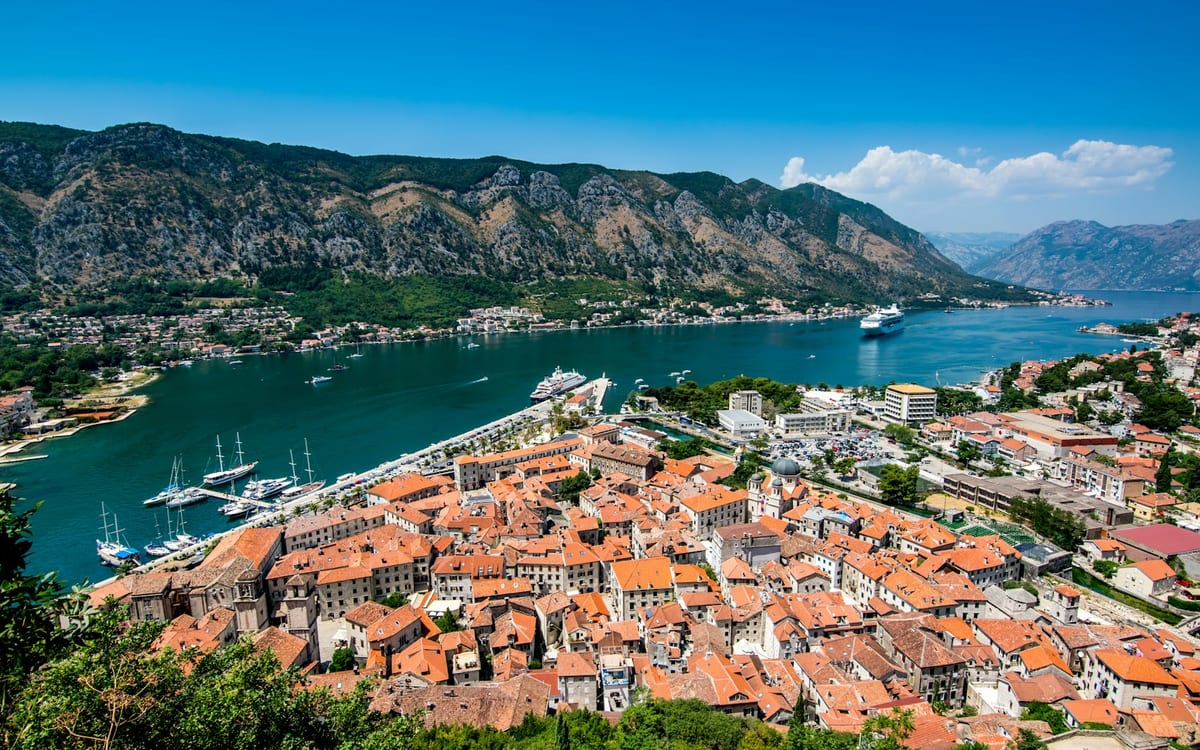
Kotor's walled Old Town is entirely pedestrian. There is no driving inside the walls at all, so do not let the satnav try to route you through the gates. The practical plan is to drive to the edge of the Old Town, drop bags briefly if your accommodation allows it, then leave the car in one of the paid car parks that line the waterfront and the main road between Kotor and Dobrota.
The two handiest are the car park beside the Kamelija shopping centre on the Skurda river just north of the walls, and the waterfront lot opposite the Old Town beside the port. They fill early in peak season and the spaces nearest the gates go first, so it pays to arrive before mid-morning or to choose a stay slightly outside the centre with its own parking. Rates are charged by the hour or day and clearly signed; keep small change or a card for the machines. If you are visiting for the day, parking a short walk north along the waterfront is usually easier than circling the central lots.
The Vrmac tunnel and the Kamenari ferry
Two pieces of local knowledge save real time around the bay. The first is the Vrmac tunnel, which bores under the Vrmac ridge to link the Kotor side of the bay with Tivat and the road south, sparing you the long climb over the ridge. It is the natural way between Kotor, Tivat Airport and Budva.
The second is the Kamenari to Lepetane ferry across the Verige narrows. It runs continuously through the day, takes only a few minutes, costs a few euros for a car, and cuts out the entire drive around the western bay. For trips towards Herceg Novi, Lustica or the Croatian border it is almost always quicker than the road, except at peak summer changeovers when a short queue builds at the ramp. Pay the attendant on board; no booking is needed.
Live prices and availability for your exact dates, with pickup in Kotor or at the airport.
Free cancellation available on most cars
Picking Up Your Car
Tivat Airport, 8 km from Kotor, is the obvious place to rent a car, fifteen minutes from landing to the Old Town. Podgorica Airport offers wider winter schedules and a scenic 90-minute drive through the mountains. Dubrovnik Airport in Croatia has the most international routes, but a Dubrovnik Airport car rental is a Croatian car and must be returned to Dubrovnik, so many visitors cross the border first and pick up a Montenegro rental in Kotor. All three have meet-and-greet handovers; if you are still weighing them up, our guide to the best airport for Kotor compares all three, or pick up a Tivat Airport car rental, the closest option to the bay.
Realistic Drive Times from Kotor
Perast: 15 min. Tivat: 20 min. Budva: 30 min. Herceg Novi: 45 min. Cetinje: 60 min. Podgorica: 90 min. Dubrovnik: 2 h. Zabljak (Durmitor): 3.5-4 h.
The Kotor, Lovcen serpentine alone contains 25 documented hairpin bends in less than 20 km. Navigation apps routinely underestimate mountain stretches by 20-30%. Plan accordingly and carry water.
What the Police Will Check
Random roadside checks are common, especially on the bay road and near border crossings. Officers will ask for:
- A valid driving licence (international driving permit accepted alongside it)
- The original rental contract (photocopies are not sufficient)
- Proof of insurance (the rental company provides this in the vehicle)
- A Green Card if crossing any border (approximately 15 euros for 15 days)
Non-Negotiable Rules
- Seat belts: mandatory for every occupant, front and rear
- Mobile phones: hands-free only, and even then police may stop you
- Alcohol: zero-tolerance policy, any detectable blood alcohol means an on-the-spot fine or worse
- Speed cameras: fixed units on the bay road and mobile traps on the highway. Fines are issued to the rental company and charged back to your card
What the Roads Are Actually Like
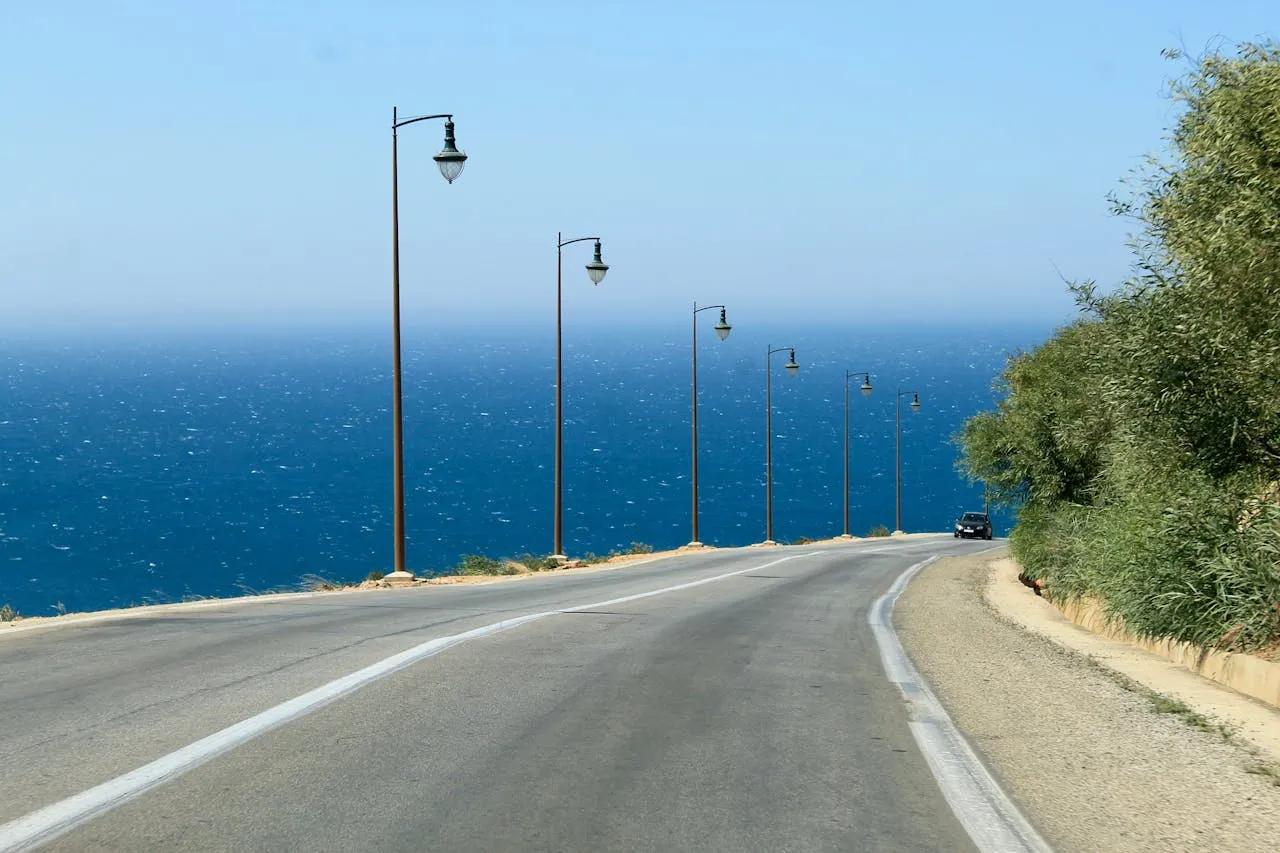
The bay road between Kotor and Perast is paved and maintained but barely two cars wide in places, with stone walls on one side and the water on the other. Mountain roads above 800 metres may lack guard rails entirely. The Sozina tunnel to Budva is modern and well-lit. The Lovcen road is narrow, steep, and has limited passing places, honk before blind bends. In winter, chains or winter tyres are legally required above the snow line. Most rental cars in Montenegro are compact petrol manuals that suit these roads well; if you would rather not change gear on the climbs, request an automatic when you book.
Fuel Stations and Costs
Montenegro has three main fuel brands: Jugopetrol (part of Hellenic Petroleum), Eko, and several independent stations. Prices are regulated and relatively uniform across the country at approximately 1.45 to 1.55 euros per litre for diesel and slightly more for petrol. All major stations accept credit cards, though smaller independent stations in the north occasionally require cash.
On the coast, fuel stations are frequent, you will pass one every 15 to 20 km along the main highways. In the mountains, they thin out considerably. Fill your tank in Kotor or Budva before heading to Lovcen, Cetinje, or anywhere inland. The Njeguski highland stretch and the road between Cetinje and Podgorica via the old mountain route have no fuel stops at all. Most rental cars are handed over with a full tank and should be returned full, so top up near your drop-off point to avoid a refuelling charge.
Speed Limits and Enforcement
Built-up areas: 50 km/h. Open roads: 80 km/h. Dual carriageways and motorway-standard roads: 100 km/h (or 130 km/h where posted). The bay road fluctuates between 40 and 60 km/h depending on the settlement. Speed cameras are fixed at several points along the bay road, near Dobrota, near Risan, and at the entrance to the Vrmac tunnel.
Mobile police speed traps appear randomly, particularly on the highway between Budva and Podgorica and on the approach to border crossings. Fines are issued on the spot and range from 30 to 200 euros depending on how far over the limit you were travelling. The rental company is notified electronically if a camera catches you, and the fine is charged to your credit card.
Two Arterial Roads
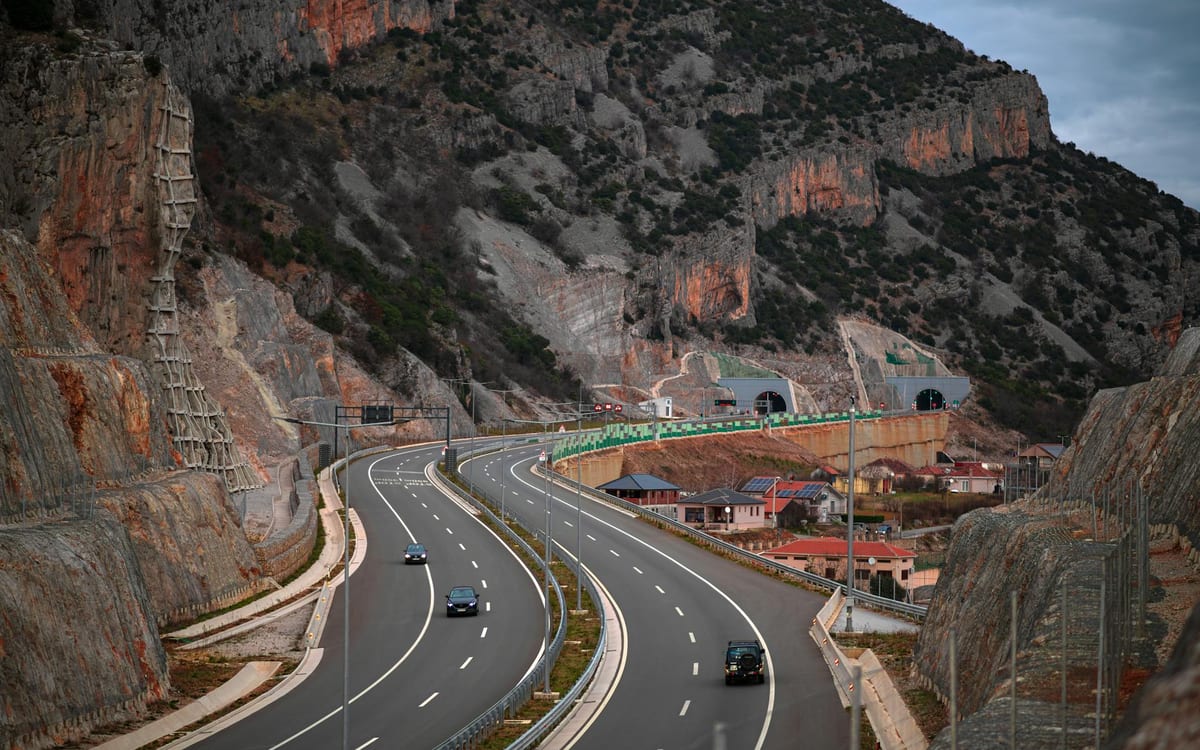
E65 / E80: The Bay Circuit
This route traces the entire Bay of Kotor from Herceg Novi around the northern arm through Perast and Kotor, then south via Tivat toward Budva. Alternatively, the Kamenari, Lepetane car ferry shortcuts the loop, saving 45 minutes. The bay road is where most visitors spend their driving time, and for good reason, the views change with every headland.
E762: Coast to the Capital
Cuts inland from the Adriatic through the Montenegrin heartland toward the Serbian and eastern Bosnian borders. This is the route to Niksic, the Piva canyon, and eventually Durmitor. Less scenic near the coast but increasingly dramatic as it climbs.
Mountain Driving: A Survival Guide
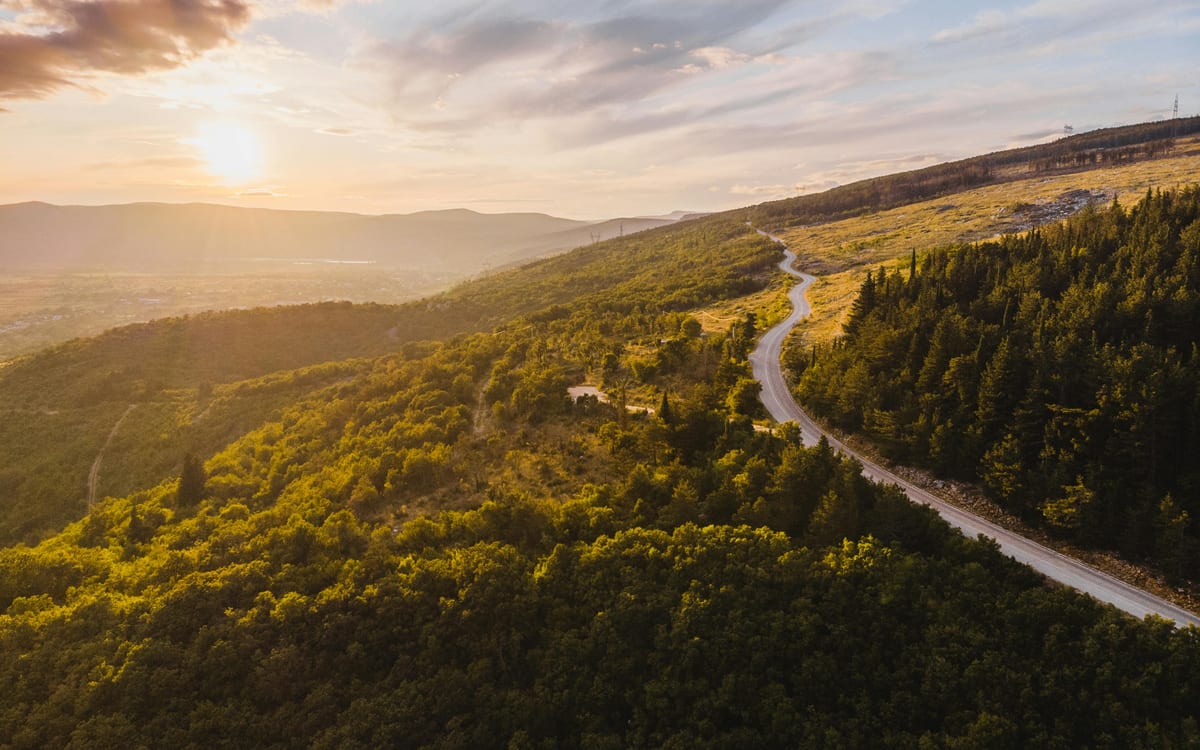
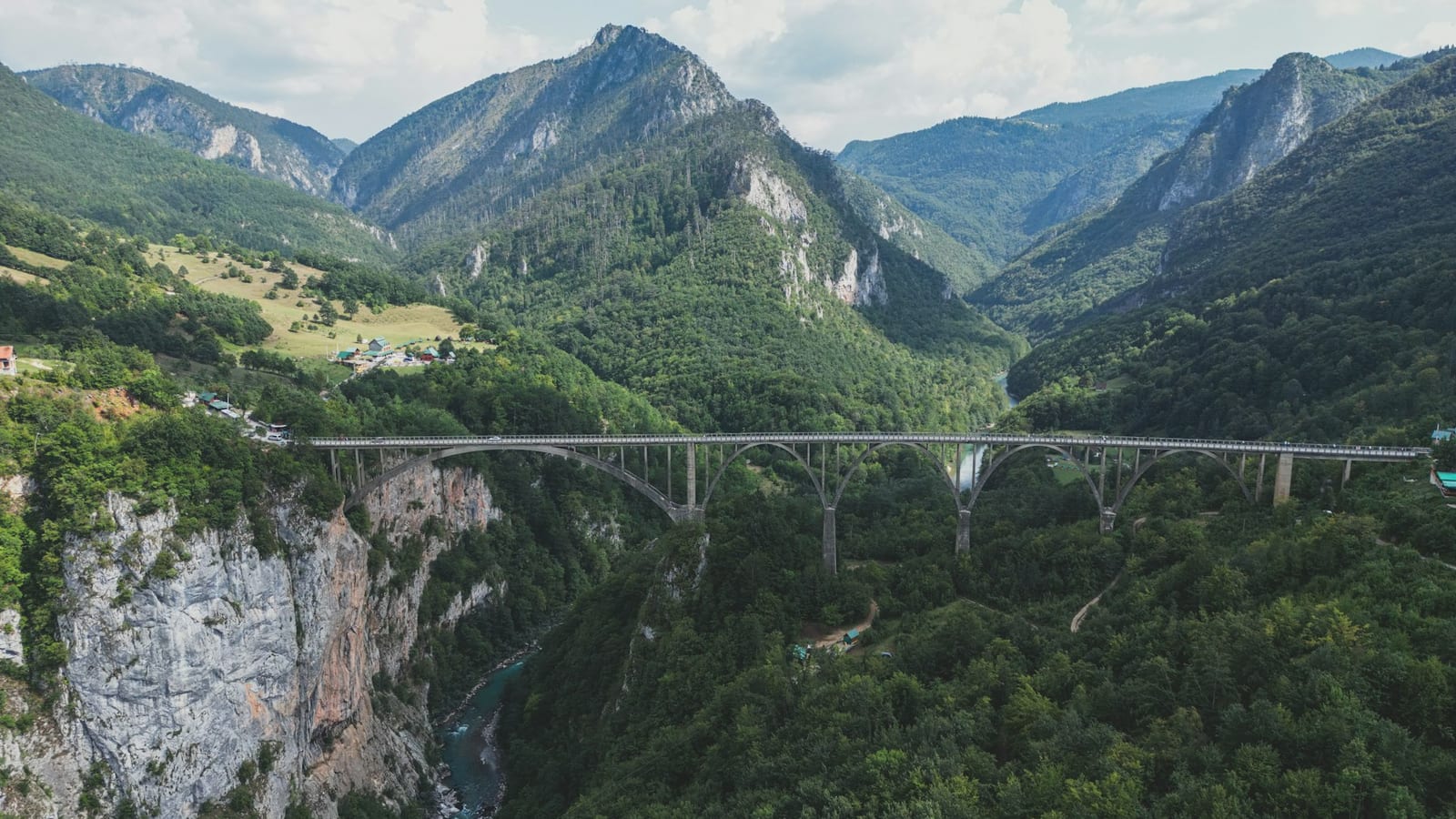
Montenegrin mountain roads are beautiful and demanding in equal measure. The Lovcen serpentine (Kotor to Njeguski) has 25 hairpin bends, no guard rails on many sections, and a gradient that requires second gear for most of the ascent. The road to Durmitor via the Piva canyon is 170 km of continuous mountain driving with narrow bridges, unlit tunnels, and occasional rockfall debris.
Practical advice: use low gears on descents to save the rental's brakes. Honk before blind bends, it is standard practice and potentially lifesaving. Carry at least 2 litres of water per person. Keep headlights on even in daytime. Pull into passing places to let faster or larger vehicles through. And budget 30 percent more time than your GPS suggests.
Crossing Into Neighbouring Countries
Cross-border driving is permitted with a Green Card, which is added to your rental as a paid extra when you book and tick the countries you plan to visit; our Montenegro border crossing guide covers the paperwork and live queues. The Croatia crossing at Debeli Brijeg is the busiest, in July and August, waits of one to two hours are normal. Weekday mornings before 08:00 or evenings after 20:00 cut the queue significantly. Other crossings (Albania, Bosnia, Serbia, Kosovo) are generally faster.
Why Montenegro Rewards Drivers
Independent only since 2006, Montenegro remains lightly visited compared to Croatia or Greece. The roads are quieter, the parking easier, and the landscapes more concentrated. A single tank of fuel can take you from Kotor's Venetian alleyways to a glacial mountain lake and back. Few countries this small pack this much into their borders, and a rental car is what unlocks them: pick one up in Kotor and the whole of it is within reach.
Driving in Kotor: quick answers
Driving around the Bay of Kotor is straightforward once you know the local quirks: the Old Town is closed to cars, parking is tight in high summer, and a couple of short tunnels and a ferry shape the quickest routes. These are the questions visitors ask most before they collect the keys, with straight answers to get you on the road with confidence.
Can you drive into Kotor Old Town?
No. The walled Old Town is fully pedestrian, with no vehicle access inside the gates. Drive to the edge, drop your bags if you can, and park in one of the paid waterfront car parks just outside.
Is the Kotor serpentine road safe to drive in a rental?
Yes, in any standard car taken slowly. The hairpins above Kotor are narrow and single-track in places, so use low gears, sound the horn on blind bends, and let faster traffic past at the widenings. Avoid the midday tour-bus rush and driving it after dark. A 4x4 is not needed.
Where do you park in Kotor?
In the paid car parks by the gate, since you cannot drive or park inside the Old Town. The handiest are the lot beside the Kamelija shopping centre on the Skurda river and the waterfront parking opposite the Old Town beside the port. They fill early in summer, so arrive before mid-morning or pick a stay with its own parking.
Is the Kamenari to Lepetane ferry worth taking?
For trips towards Herceg Novi, Lustica or Croatia, usually yes. It crosses the narrows in a few minutes for a few euros and saves the long drive around the western bay. Expect a short queue only at peak summer changeovers; pay on board, no booking needed.
Do you need a 4x4 to drive around Kotor and Lovcen?
No. The bay roads, the serpentine and the climb to Lovcen are all paved and manageable in a standard car. A compact is fine; just drive to the conditions and the narrow widths rather than the clock.
Are there road tolls in Montenegro?
Almost none. The only toll most visitors meet is the Sozina tunnel on the route between the coast and Podgorica, around 2.50 euros for a car, paid by cash or card at the barrier when heading north. There is no vignette or windscreen sticker to buy, and the rest of the network, including the bay roads around Kotor, is toll-free.
Can I drive in Montenegro on my home licence?
Usually yes. EU licences are accepted as they are, and UK, US, Canadian, Australian and most other licences in the Latin alphabet are fine too. If your licence is in a non-Latin script you will also need an International Driving Permit. Keep your licence, passport and the rental papers in the car, since police checks are routine.
Pick up in Kotor or at the airport and have the whole country in range.
Unlimited mileage on most cars