Renting a car in Budva
Budva is the busiest hub on the Montenegrin coast, which also makes it one of the quickest places to get into a rental car and onto the road. Demand runs high all summer, so the smart move is to compare the rental fleet and book a car in Budva before you arrive rather than hope a desk has something spare in August. With free in-town delivery on most cars and pickup minutes from your accommodation, collecting a car here is fast, and you can be beach-hopping within the hour.
Popular rental cars in Budva
Budva for drivers
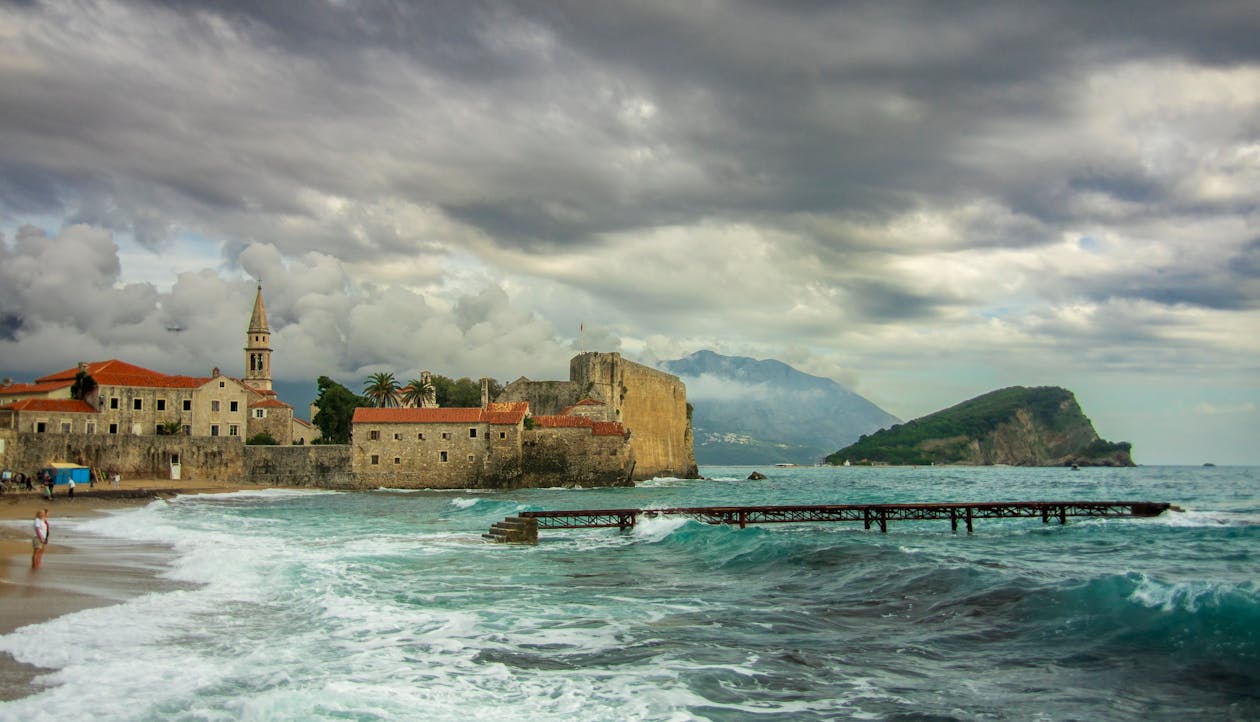
Budva is the heart of the Adriatic Riviera: a walled medieval old town sitting on a stubby peninsula, ringed by a string of beaches and backed by steep coastal mountains. The town itself is compact and walkable once you are inside the walls, but everything that makes the area special is spread out along the coast, and that is where a car earns its keep. The beaches run from Jaz in the west through Mogren right below the old town and on to Becici and Rafailovici, and stitching them together on foot or by taxi gets expensive and slow fast.
Think of Budva as a base rather than a single destination. With your own car you can chase a different beach each morning, drop down to photogenic Sveti Stefan 8 km to the south, push on to quieter Petrovac, or climb inland toward Lovcen and the old royal capital when you want a break from the sun. A rental also makes the short hop around the bay to the fjord towns effortless, and many visitors pair a few Budva nights with time in Kotor to see both sides of the coast on one trip. New to it? Our guide covers how to book a car in Kotor.
Where to pick up in Budva
Collection in Budva is flexible. You can have a car delivered to where you are staying, or meet a driver at one of the town's main arrival points; these are the spots travellers use most.
- Hotel Avala
- Hotel Tre Canne
- Bus terminal
- Hipermarket HDL
- Petrol EKO station
Whichever you choose, the car can be waiting when you arrive, and one-way pickups between the riviera and the bay are simple to arrange.
Getting there and driving
Most visitors reach Budva from Tivat Airport, about 22 km and roughly 25 minutes by car along the coast, while Podgorica Airport is around 65 km and a little over an hour inland. The drive in from Tivat is straightforward, climbing over a low pass before dropping toward the Budva basin, and the road is sealed and well signed the whole way.
Driving in Budva itself is easy outside the walls, where roads are modern and the seafront promenade connects the resort strips, though the old-town lanes are pedestrianised and not for cars at all. Traffic thickens noticeably in July and August around the marina and the main coastal junction, so leave a buffer if you are timing a beach run or a dinner reservation. The coast road south toward Sveti Stefan and Petrovac is one of the most rewarding short drives in the region, and it continues comfortably on toward Kotor in the other direction.
Live prices and availability for your exact dates.
Free cancellation on most cars
Parking in Budva
Parking is the one genuine challenge in Budva, and it is entirely seasonal. The garages and surface lots closest to the old town fill fast in peak summer; in July and August the realistic advice is to arrive before 9am if you want a central space, or accept a short walk from a lot further back. Out of season the same lots sit half empty and you can park almost anywhere near the walls.
Where you stay matters more than where you park: many apartments and resorts on the Becici and Rafailovici side include their own parking, which sidesteps the old-town crush entirely and lets you drive in only when you want to. Because parking pressure tracks the season so closely, booking your car early is the best way to guarantee both the vehicle and a smooth arrival, so it is worth booking before your dates fill up.
Scenic drives and day trips
The classic short run is south along the coast to Sveti Stefan, just 8 km and around 15 minutes, where the famous fortified islet photographs beautifully from the viewpoint above the road. Carry on another 20 minutes and you reach Petrovac, a smaller, calmer resort with a pretty bay that makes an easy half-day escape from the Budva crowds.
Inland, the drive up to Lovcen National Park and on to the old royal capital at Cetinje is the standout day trip: roughly an hour each way on switchbacking mountain roads with huge views back over the coast. From there it is a natural loop down into the Bay of Boka, and the run round to Kotor takes about 40 minutes from Budva, making a full coast-and-mountain day very doable on a single tank.
- Tivat Airportover the coastal road and through the Vrmac tunnel
- Sveti Stefana quick hop south along the riviera coast road
- Kotornorth through the Vrmac tunnel into the bay
- Petrovacan easy cruise on south down the open coast
- Podgoricainland via the Sozina tunnel to the capital
Day-trip routes from Budva
From Budva you are well placed for both the coast and the mountains. Each loop below is round trip with a hire car from town.
Budva riviera to Petrovac (half day)
South along the coast road through Bečići, Pržno and past Sveti Stefan to Petrovac’s sandy bay. Around 45 km round trip, 4 hours with swim stops.
Budva to Kotor and Perast (half day)
North through the Vrmac tunnel to Kotor’s old town, then on along the inner bay to Perast for the island churches. Around 60 km round trip, 5 hours.
Budva to Lovćen and Cetinje (full day)
Up the mountain road to Lovćen National Park and the Njegoš mausoleum, then to the old capital Cetinje. Around 90 km round trip, a full day.
Budva to Skadar Lake wineries (full day)
East via the Sozina tunnel to Virpazar for a lake boat tour, with a tasting in the Crmnica wine villages on the return. Around 120 km round trip, 7 to 8 hours.
Driving in Budva: roads, rules and fuel
The main artery through the riviera is the Jadranska magistrala, the Adriatic highway that threads along the coast and carries almost all the through traffic. It is a well-surfaced two-lane road that is easy to drive in the quieter months, but in peak summer it loads up quickly and the busy junctions around town can crawl at midday. Keep to the 50 limit through built-up stretches, where speed cameras and pedestrians both appear without much warning.
West of town the magistrala dips through the tunnel toward Tivat, a short, well-lit passage that takes the edge off the headland climb. Once you clear the congestion the open road opens up to a higher limit and the riviera driving becomes genuinely pleasant, with fuel stations spaced regularly along the route so you rarely run low. Prices are standardised nationwide, so there is no need to hunt for a cheaper pump; simply fill up wherever is convenient before a longer run.
What you need to rent
Collection is quick once you have the right paperwork to hand. Bring a full driving licence that you have held for around a year, plus your passport or national ID card so the desk can confirm who is driving. If your licence is not in the Latin alphabet, carry an International Driving Permit alongside it. Having these ready at handover keeps the process to a few minutes and gets you onto the coast road without a wait.
Age rules are straightforward: entry begins at 18, though most vehicles are released from 21, and an upper limit of roughly 70 applies on many cars. A refundable deposit is taken at pickup and returned in full once the car comes back in the same condition. Crucially, most cars can be reserved without a credit card, so a debit card or other payment method is fine; the deposit is simply held against the booking and released afterwards.
One-way rentals and drop-offs
One-way hire works well from Budva: collect the car here and drop it at another point along the bay or at one of the regional airports, which suits anyone flying out from a different airport than they arrived at. It saves doubling back along the coast at the end of a trip. Note that cross-border drop-offs are not supported, so the vehicle must stay within Montenegro. See our one-way car rental options for the routes we cover.
Insurance and deposit
Every booking through this site includes free Minimum third-party cover as standard, which keeps you legal on Montenegrin roads from the moment you drive off. On top of that you can add Basic cover or Full Coverage as a paid upgrade to bring down what you would owe in the event of damage, and a refundable deposit of roughly EUR 100 applies on these lower tiers.
If you would rather travel with zero exposure, the top Full Coverage Plus tier removes the excess and the deposit entirely, which many people choose for a summer trip that mixes tight old-town lots with busy coastal traffic. Most cars can be booked without a credit card and the deposit is fully refundable, and payment can be made by cash, card or crypto when you collect.
For Budva's mix of packed summer car parks and winding coast roads, a compact like the VW Golf is the sweet spot, small enough to slot into a tight old-town space yet comfortable on the longer drives to Sveti Stefan and Lovcen.
Pick up the keys and drive
Budva rewards anyone with their own wheels: a different beach every morning, an effortless run down to Sveti Stefan, and a mountain escape inland whenever the resort buzz gets too much. Book early to beat the summer squeeze, take delivery wherever you are staying, and you will spend your days on the coast road instead of in a taxi queue.
Budva car rental FAQ
Not sure where to park in peak-season Budva, or how far the beaches and Sveti Stefan really are once you have the keys? These are the questions renters in Budva ask us most.
Where can I pick up a rental car in Budva?
You can collect almost anywhere in town. Free delivery to your apartment, villa or hotel is available on most cars, and popular meeting points include the bus terminal, the marina and the main old-town entrance. If you are flying in, picking up at Tivat Airport and driving the coast road in is often the simplest option.
How far is Budva from the nearest airport?
Tivat Airport is the closest, about 22 km and roughly 25 minutes by car along the coast. Podgorica Airport is further inland at around 65 km, a little over an hour's drive.
Is parking difficult in Budva?
Only in peak summer. The lots nearest the old town fill fast in July and August, so arrive before 9am for a central space or use a lot slightly further out. Out of season parking is easy, and many Becici and Rafailovici stays include their own spaces.
Can I do a one-way rental from Budva?
Yes. One-way pickups are available, so you can collect in Budva and drop off elsewhere, for example at Tivat Airport or another town, which suits a coast-to-airport itinerary.
What is the minimum age and driving experience to rent in Budva?
It depends on the car. The entry-level vehicles are available from 18 with at least one year of driving experience, most of the fleet is open from 21, and a few categories ask for two to three years behind the wheel. The usual upper limit is around 70. Filter by your age and experience when you book to see the cars in Budva open to you.
Do I need a credit card to rent in Budva?
In most cases no. The majority of cars can be booked without a credit card, and payment is accepted by cash, card or crypto. A refundable deposit of around EUR 100 applies on the lower insurance tiers, and Full Coverage Plus removes the deposit entirely.
Do I really need a car for a Budva holiday?
If you want to explore, yes. The town centre is walkable, but the beaches, Sveti Stefan, Petrovac and the inland mountains are all spread out, so a car turns a few isolated spots into an easy day-by-day itinerary.
Collect at the airport or have the car delivered to your door in town.
Free in-town delivery on most cars