The Road Less Driven
Most drivers heading from Kotor to Cetinje take the modern highway via Budva, faster, wider, and entirely forgettable. The original mountain road, by contrast, climbs directly out of the bay on a series of switchbacks, passes through the highland hamlet of Njeguski, crosses the Lovcen shoulder, and descends into Cetinje through rolling meadows and stone farmland.
The drive takes about 90 minutes including stops, compared to roughly an hour on the highway. The extra thirty minutes buy you smoked ham at a farmhouse door, views that extend to the Italian coast on clear days, and a sense of how Montenegro's old royal capital connected to the sea before tunnels and motorways existed.
The Ascent from Kotor
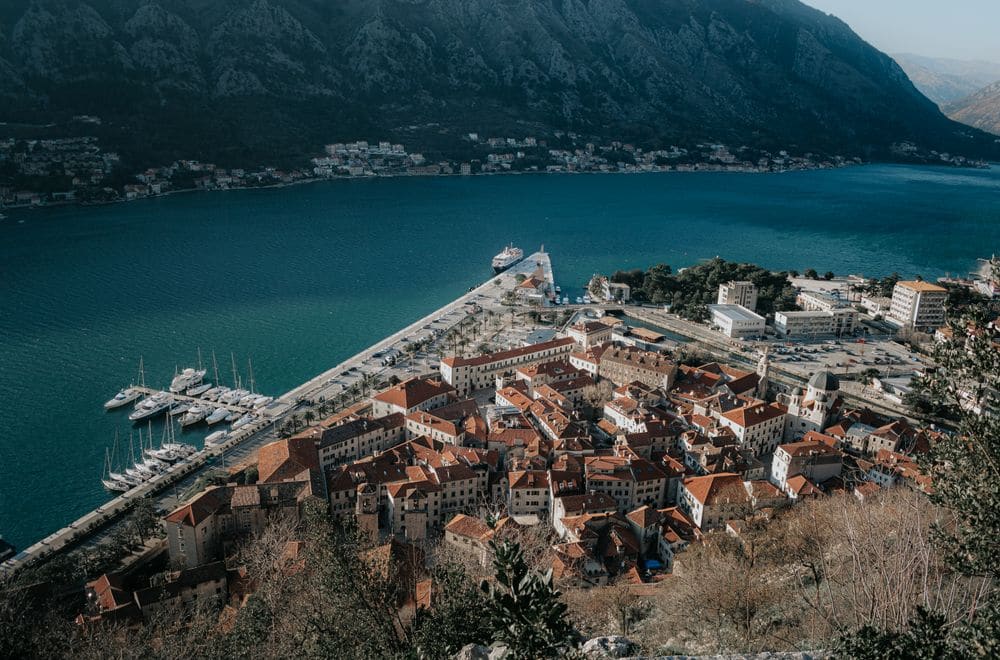
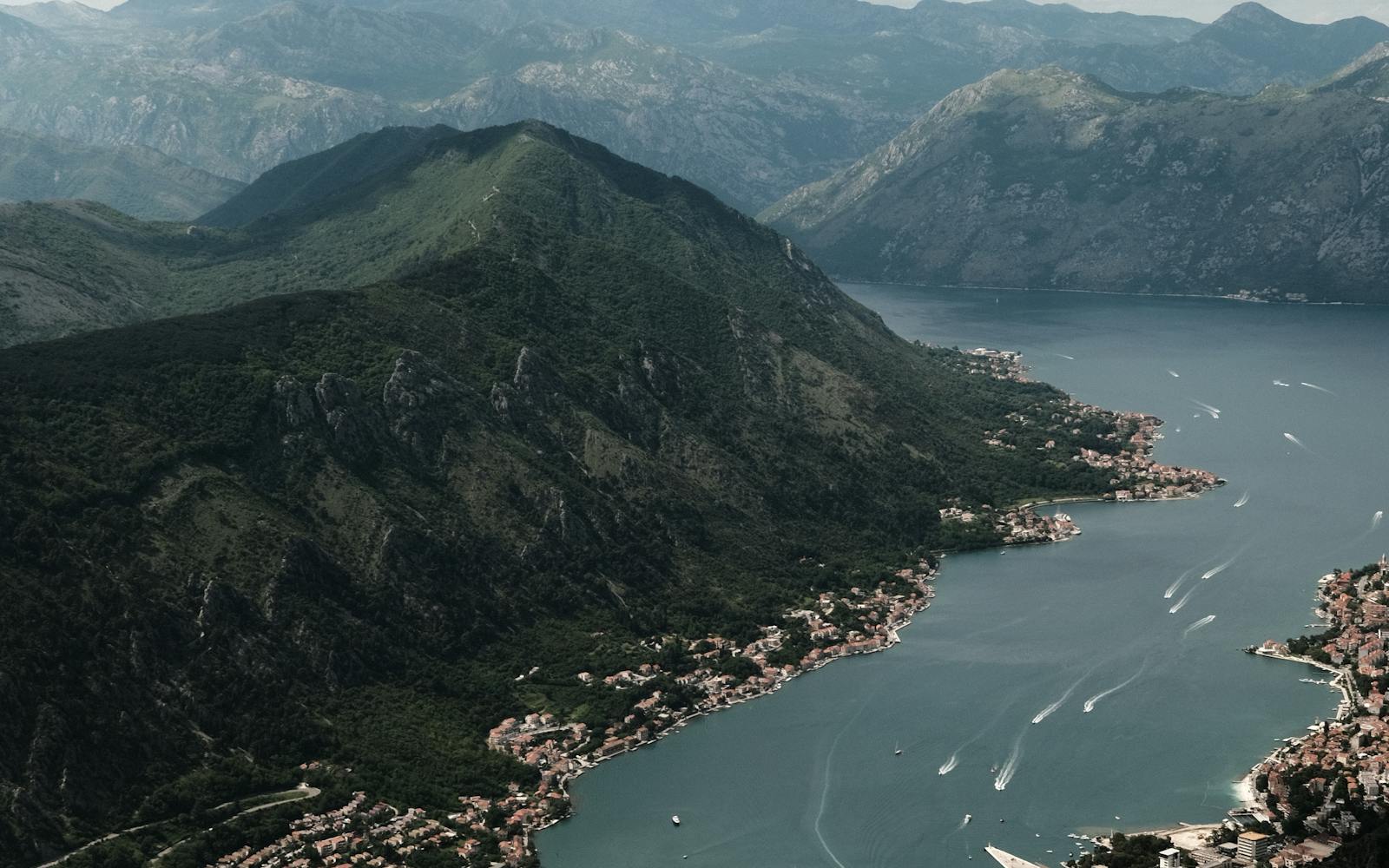
The road begins at the back of Kotor, climbing steeply through residential streets before the switchbacks begin. The first section shares the route with the famous Lovcen serpentine, 25 hairpin bends numbered on stone markers. At bend 17, pull over at the marked viewpoint for the classic aerial photograph of Kotor and the bay below. By bend 25, you have left the coast behind entirely.
The gradient is significant but the road surface is good. Use second gear for most of the climb and stay aware of downhill traffic, tour coaches occasionally descend this road, and passing is tight on the narrower sections. Any ordinary rental car handles the old road comfortably as long as you take the bends slowly. Each numbered bend has a small widened area on the outside edge that serves as both viewpoint and passing place. The ascent from sea level to the Njeguski plateau takes roughly 30 minutes of continuous driving. For more on what to expect, see our Montenegro driving guide.
Njeguski: The Ham and Cheese Village
Just past the final hairpin, the road levels out and enters the highland village of Njeguski. This is where Montenegro's most famous foods originate: njeguski prsut (dry-cured ham smoked in mountain air) and njeguski sir (a semi-hard sheep's cheese with a distinctive character). Several farmhouses along the road sell both directly, look for handwritten signs. Stop, taste, buy. The ham is among the finest cured meats in the Balkans.
The Petrovic family homestead, about 500 metres past the village centre on the left side, is a reliable stop. They cure their own ham in a stone smokehouse behind the main building and age their cheese in a cellar. A tasting plate of ham, cheese, olives, and homemade bread costs 5 euros, and you can buy vacuum-packed portions to take away. The family also makes a clear grape brandy (lozovaca) that they pour generously for visitors, if you are driving, decline politely and buy a bottle for later instead.
Over the Shoulder to Cetinje
From Njeguski, the road crosses the Lovcen ridge and begins a gentler descent toward the Cetinje plateau. The landscape shifts from bare karst rock to green meadows dotted with grazing sheep. The former royal capital appears in a valley surrounded by low mountains, a modest, dignified town that was once the centre of Montenegrin independence.
The descent is considerably easier than the ascent. The road widens, the gradients lessen, and the views open up across the plateau. In spring, the meadows are covered in wildflowers, buttercups, clovers, and the occasional wild orchid. Sheep grazing beside the road are common and generally unbothered by passing cars, though a lamb occasionally decides to cross at the worst possible moment. Slow down through the pastoral sections.
Live Kotor car rental prices for your exact dates.
Free cancellation available on most cars
What to See in Cetinje
Cetinje served as Montenegro's capital from 1482 until 1946. The Cetinje Monastery, rebuilt in 1786, safeguards relics including what is claimed to be the right hand of John the Baptist and a fragment of the True Cross. The former Royal Palace of King Nikola I, now a museum, displays paintings, personal items, and photographs from the brief era of Montenegrin monarchy. Both sit on a tree-lined boulevard that retains a distinctly 19th-century atmosphere.
Beyond the two main attractions, Cetinje rewards an hour of wandering. The tree-lined Glavni Grad pedestrian street is flanked by former embassies, grand buildings from the period when Cetinje served as a European capital, now quietly fading. The National Museum has paintings by Montenegrin artists. And the Biljarda Palace, built in 1838 for Prince-Bishop Njegos, houses a relief map of Montenegro carved in the 19th century that is worth seeing for its sheer ambition.
Where to Eat in Cetinje
Restoran Belvedere, on the Cetinje-Podgorica road just south of town, serves traditional Montenegrin dishes with views across the surrounding hills. The lamb cooked under the sac is exceptional, slow-roasted with potatoes and herbs for several hours. A full meal costs 10 to 15 euros per person. Alternatively, Kole on the main boulevard serves pizza and grilled meats at lower prices with a pleasant terrace for watching Cetinje life go by.
Returning to Kotor
You have three options: retrace the mountain road (dramatic in evening light), take the modern highway via Budva (faster, less interesting), or continue north through Rijeka Crnojevica and along the shore of Lake Skadar before looping back to Podgorica and the coast. The lake route adds two hours but passes through completely different landscape.
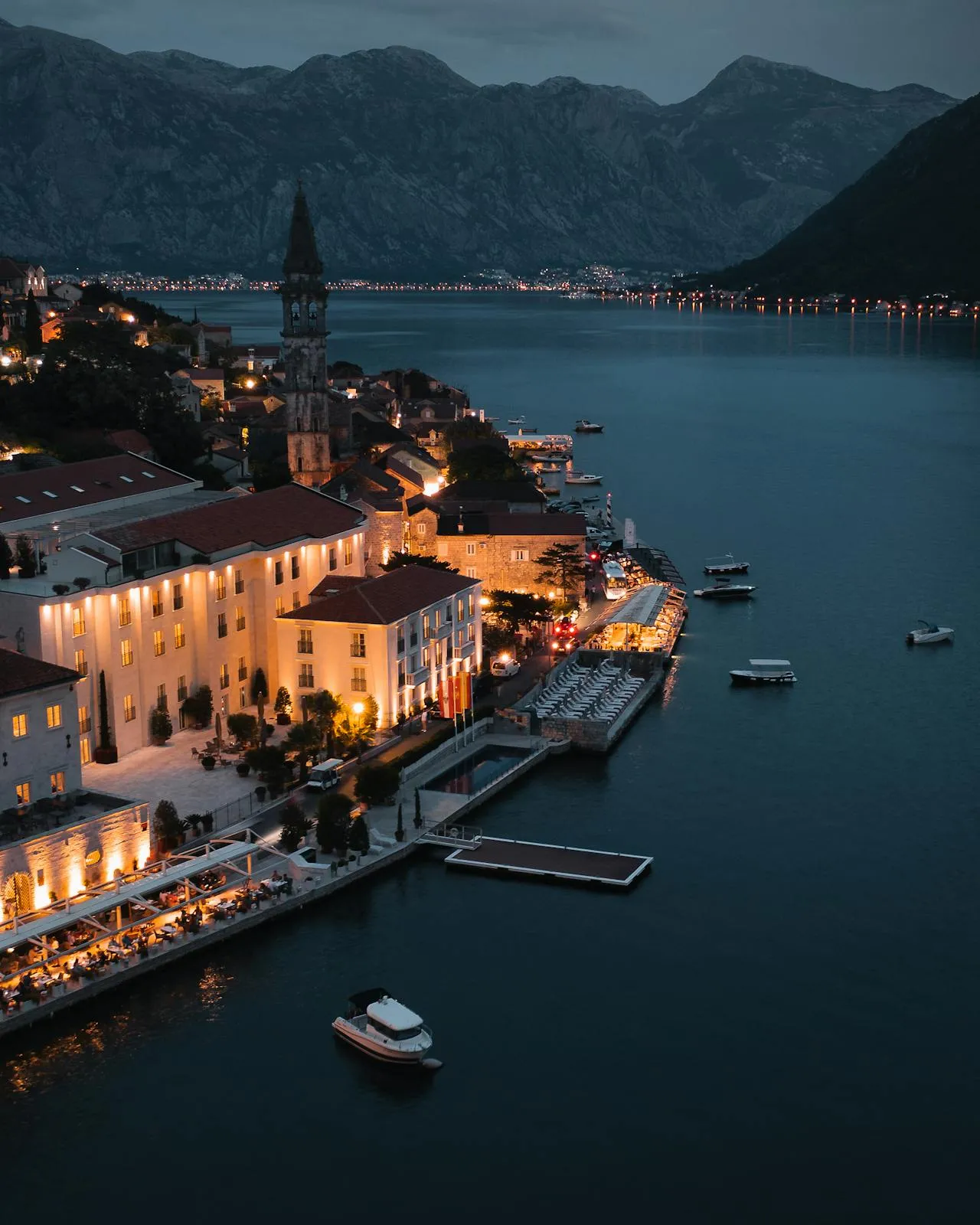
If retracing the mountain road at dusk, the descent back into the bay provides the day's final spectacle. As you round the upper switchbacks, the bay appears below, dark water reflecting the lights of Kotor and Dobrota. The last stretch of the descent, with the illuminated fortress walls visible ahead, is one of the most memorable drives in the country.
Driving Tips
- Car choice: Any car handles this road. The switchbacks are easier in a compact with good torque. Automatic transmission reduces fatigue.
- Season: April to October is ideal. Winter may bring snow on the upper sections, check road conditions before departure.
- Fuel: Fill up in Kotor. There are no petrol stations between the bay and Cetinje on this route.
- Time: Allow a full morning or afternoon. Three hours minimum including stops at Njeguski and Cetinje.
- Photography: The viewpoint at bend 17 is the classic shot. But the views from Njeguski village and the descent to Cetinje are equally dramatic on a clear day.
Also Worth Reading
If the Njeguski food stop whets your appetite, our guide covers Kotor's food markets and where locals shop.
At a Glance
Compare cars with the power for the serpentine, live prices for your dates.
Free cancellation available on most cars