Kotor's Hidden Neighbour
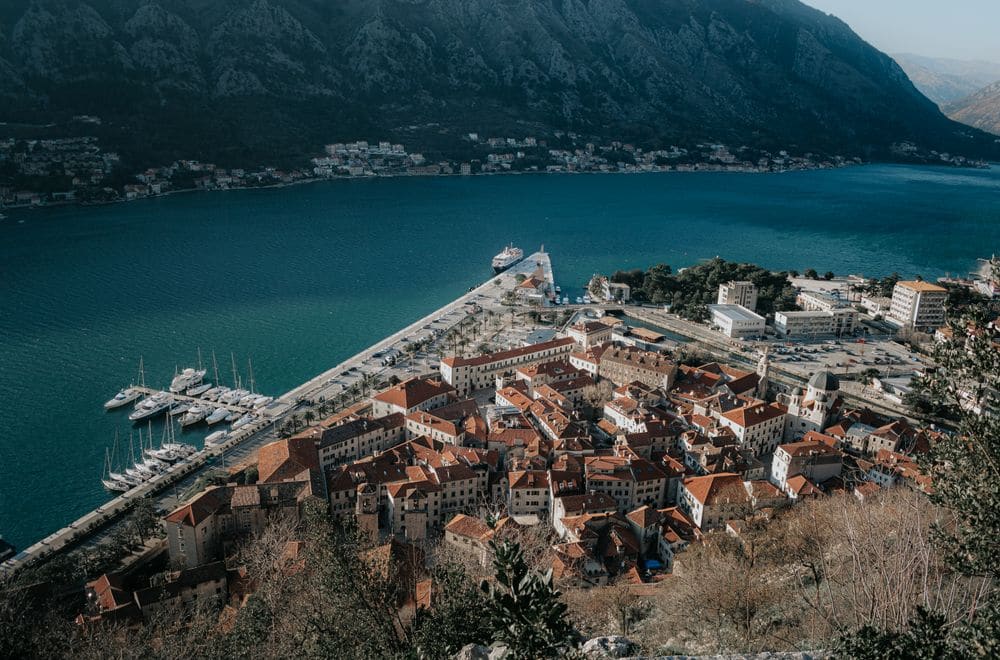
Dobrota begins where Kotor and its Old Town end. Drive north from the Old Town along the bay road for ten minutes and the tourist crowds thin to nothing. The waterfront widens into a stone promenade lined with palazzo facades, some restored, some crumbling photogenically, and a scattering of restaurants and wine bars that Kotor residents consider their own territory.
The village stretches for about 2 km along the water's edge. There is no centre in the traditional sense, just a continuous ribbon of stone, water, and mountain. With a rental car the whole stretch is easy to reach: park anywhere along the road (free outside summer peak) and walk.
The Palazzo Waterfront
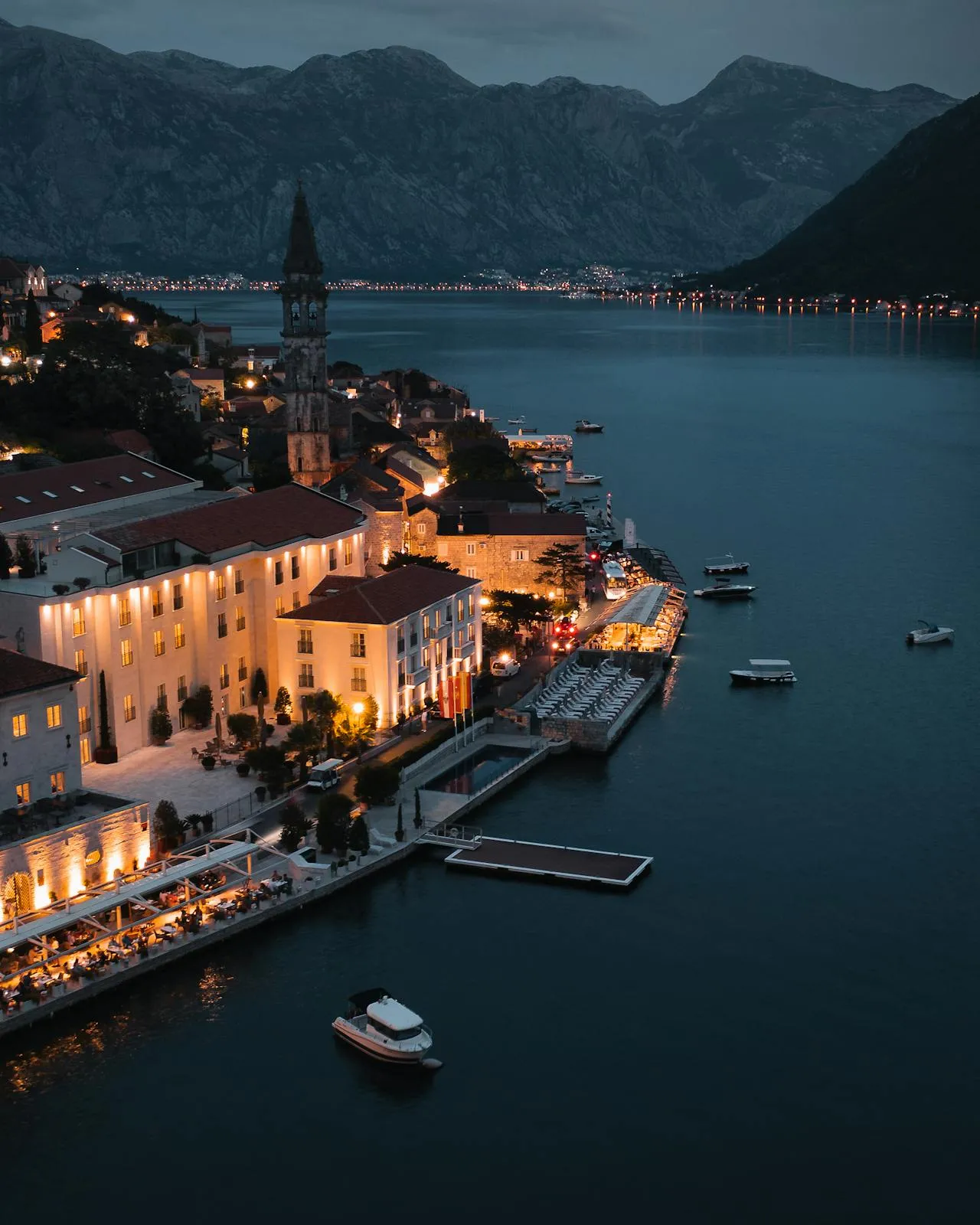
Dobrota's wealthy sea captains built their homes along this stretch during the Venetian period. The Palazzo Tripkovic, Palazzo Dabinovic, and several others line the promenade with carved doorways, iron balconies, and walled gardens visible through rusted gates. Most are privately owned and not open to visitors, but the exteriors alone tell the story of a settlement that once rivalled Perast in maritime wealth.
Look for the stone carvings above doorways, many feature ships, anchors, or the Venetian lion, indicating the owner's profession and allegiance. The Palazzo Tripkovic has a particularly fine carved lintel showing a galleon under full sail. Several buildings show earthquake damage from 1979 that has never been fully repaired: cracked walls, missing balconies, and the occasional open room visible through a collapsed ceiling. These ruins are part of Dobrota's character rather than a sign of neglect.

Churches Along the Way
Two churches punctuate the waterfront walk. The Church of St Matthew (Sveti Matej) dates from the 15th century and holds a collection of religious paintings attributed to local and Venetian artists. Further along, the Church of St Eustace (Sveti Eustahije) is the larger of the two, with a bell tower that serves as a landmark for boats approaching from across the bay.
St Eustace is Dobrota's most significant building. The treasury contains religious silver and gold pieces gifted by sea captains returning from successful voyages. Opening hours are irregular, try mid-morning on weekdays for the best chance of finding it open. A sacristan sometimes sits outside and will unlock the treasury room for interested visitors. No formal entry fee, but a donation of a few euros is appropriate.
Where to Eat and Drink
Dobrota's restaurants occupy converted ground floors of old stone houses, with tables extending onto the waterfront in summer. The cuisine is the same as Kotor, grilled fish, black risotto, local salads, but the atmosphere is noticeably calmer and the prices slightly lower. Several wine bars have opened in recent years, pouring Montenegrin wines by the glass alongside small plates of cheese and cured meats.
Konoba Catovica, roughly midway along the waterfront, is a local favourite for grilled fish and house wine. The stone terrace sits at water level, and on still evenings you can hear the bay lapping against the steps. Their grilled bream with blitva costs about 14 euros. Further along toward Ljuta, Restoran Stari Mlini (Old Mills) sits beside an old watermill and offers a more refined menu, try the black risotto with cuttlefish ink. Main courses run 14 to 20 euros. Both restaurants are considerably less crowded than anything inside Kotor's walls.
Live Kotor car rental prices for your exact dates.
Free cancellation available on most cars
Swimming in Dobrota
Several concrete platforms and stone steps along the Dobrota waterfront provide access to swimming. The water is deep, clean, and relatively warm from June through September. The platform near the Church of St Matthew is popular with locals in the late afternoon. There is no beach as such, this is ladder-and-platform swimming, but the water quality is excellent and the mountain backdrop makes up for the lack of sand. Bring water shoes for the rocky entry points. For more spots around the bay, see our guide to swimming in the Bay of Kotor.
A Village of Sea Captains
Dobrota's wealth came from the sea. During the centuries of Venetian rule, its captains sailed trading ships across the Mediterranean and returned with money, goods, and architectural ambitions. By the 18th century, Dobrota's fleet numbered over 30 merchant vessels, and the village had its own maritime school and insurance fund. The palazzi along the waterfront were their legacy, grand stone houses built to impress visitors arriving by boat. The maritime tradition is documented in Kotor's Maritime Museum, a 20-minute drive away, where Dobrota captains feature prominently in the collection.
Dobrota by Season
Summer Dobrota is the village at its liveliest. Restaurant terraces fill from early evening, swimmers splash off the stone platforms, and the waterfront promenade becomes a passeggiata route for locals escaping the Old Town crowds. July and August bring the warmest water and the longest evenings, but also the heaviest parking demand.
Spring and autumn are quieter and in many ways more rewarding. The palazzo facades look their best in the soft light of April, when wisteria and bougainvillea drape the garden walls. October brings golden evening light that sets the stone buildings glowing. In winter, Dobrota is almost deserted, a few cafes stay open, the churches are unlocked, and you can walk the entire waterfront without seeing another person. The mountains across the bay collect snow, and the contrast of white peaks above dark water is striking.
Sunset Viewing
Dobrota faces west across the bay, directly into the sunset. The mountains above Perast and Risan turn orange and gold in the last hour of daylight, reflected in the still water. Any point along the promenade works, but the stretch between the two churches is particularly good, unobstructed views, a bench or low wall to sit on, and the quiet broken only by the occasional boat motor.
Getting There
From Kotor Old Town, drive north on the bay road, one of the gentlest first drives if you are weighing up a rental; Dobrota begins almost immediately and the transition is seamless. On-street parking is available throughout the village. In July and August, arrive before 18:00 if you want a restaurant table for sunset.
Alternatively, walk from Kotor. The promenade from the northern walls to the first palazzi of Dobrota is about 800 metres along the waterfront, a flat, easy walk that takes 10 to 12 minutes. This is a good option on cruise-ship days when parking near Kotor is impossible. For another bay road walk, see our guide to the spring wildflower drives around the bay.
At a Glance
Collect in Kotor or take free delivery to your Dobrota address.
No credit card needed to book