Renting a car in Kotor
Kotor is one of the easiest places on the bay to collect a car, with pickup at the Kamelija shopping centre, the bus terminal, Hotel Forza Mare in Dobrota or the cruise port, plus free in-town delivery on most cars; compare the rental fleet and book a car in Kotor before you land. If you are flying in, the car can be ready within minutes of landing. Because the walled Old Town is entirely car-free, a rental here is less about driving into the centre and more about unlocking everything beyond it, from the serpentine climb to Lovcen to the quiet villages strung along the shore.
Popular rental cars in Kotor
Kotor for drivers
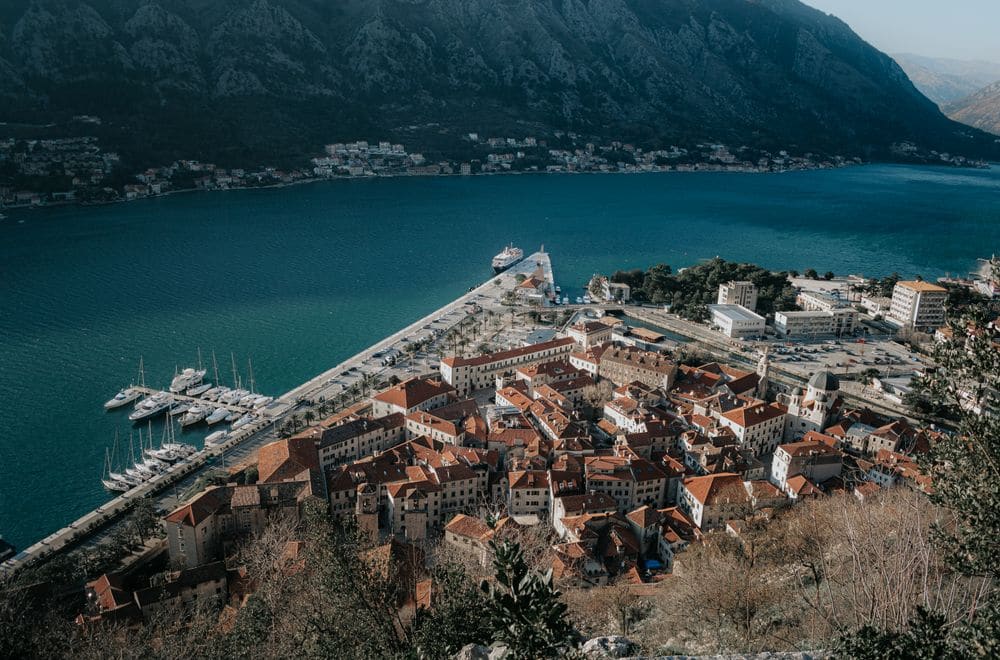
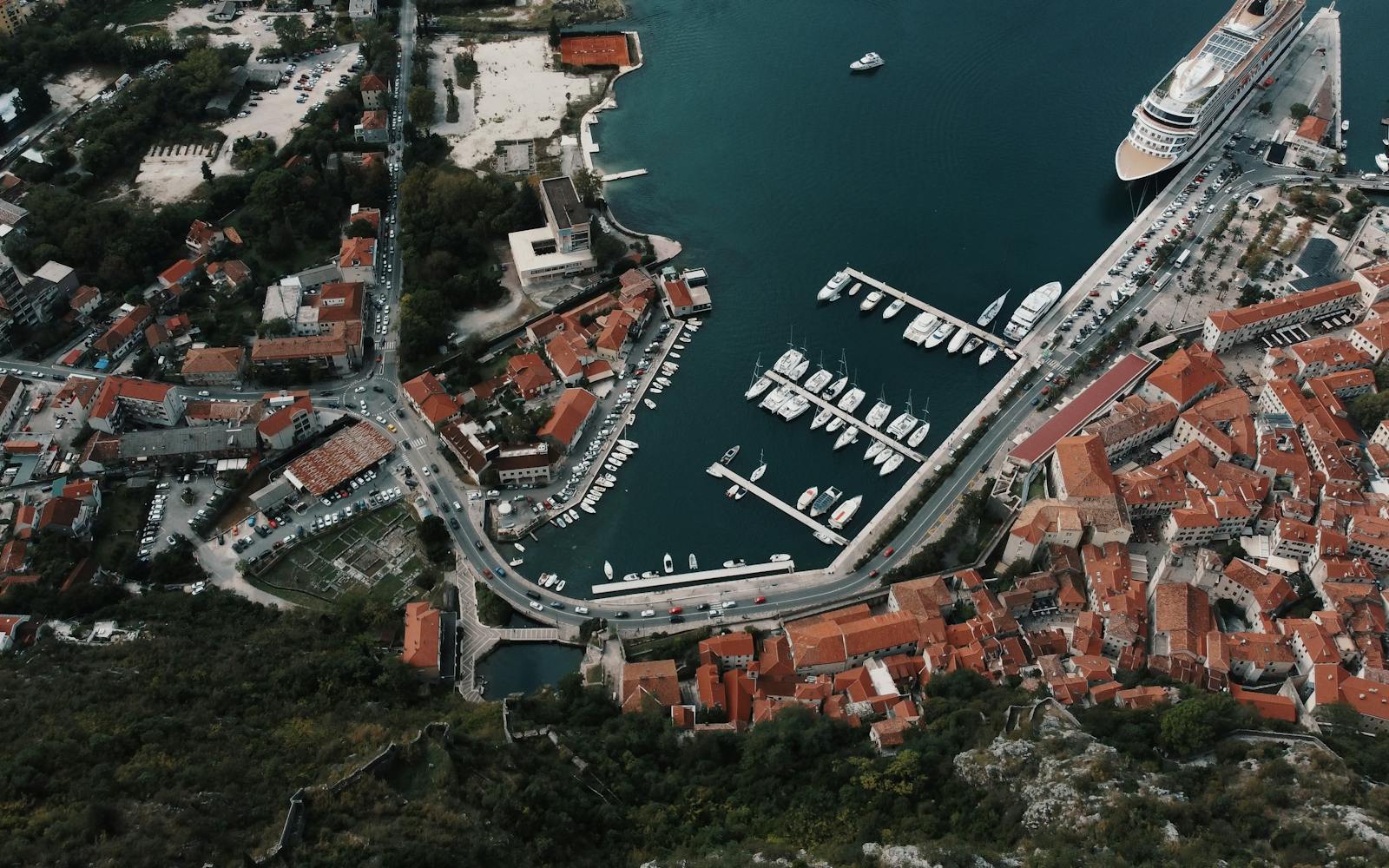
Kotor sits at the very head of the Bay of Kotor (Boka), a deep fjord-like inlet ringed by near-vertical mountains, with a UNESCO-listed medieval town tucked beneath the ramparts. The Old Town itself is a maze of car-free stone lanes, so cars stay on the bayfront ring road and in the car parks by the gate. That layout makes Kotor a natural base rather than a place you drive through: you park up, explore the town on foot, then take the car out to reach the coast road to Perast and Risan, the Lovcen mountain climb, and the beaches beyond Tivat.
What a car really unlocks here, and the case for renting a car in Kotor, is the rest of the bay and the country behind it. Without one you are tied to cruise-day crowds and infrequent buses; with one you can be on the Lovcen serpentine in twenty minutes, in Perast for the island boats in a quarter of an hour, or out at an empty cove for a swim before the tour groups arrive. Kotor's compact size and central position on the bay mean almost every worthwhile drive in Boka and beyond starts within a few minutes of your pickup.
Where to pick up in Kotor
Collection in Kotor is flexible, and because the Old Town has no through traffic, most pickups happen at the waterfront edge or come straight to your door. The usual options are:
- Kamelija shopping centre
- Bus terminal
- Hotel Forza Mare, Dobrota
- Cruise port
Whichever option you choose, the car can be ready when you arrive, and one-way pickups between bay points are simple to arrange.
Getting there and driving
Most visitors reach Kotor through Tivat Airport, just 8 km away, around 15 minutes by car along the bay road. Podgorica Airport is roughly 90 minutes inland, and Dubrovnik in Croatia is about two hours north including the border crossing, so an arranged delivery or a one-way pickup often makes more sense than juggling buses. Once you have the keys, the single coastal ring road carries you around the whole inner bay.
Driving in Kotor itself is straightforward as long as you remember the Old Town is closed to cars; you skirt it on the waterfront road and park in the lots by the gate. The bay road is paved and scenic but narrow in places and slow behind summer coaches, so steady patience beats speed. Heading north it is an easy fifteen-minute run to Perast, while south the road climbs over Vrmac toward Tivat and the open Adriatic side.
Live prices and availability for your exact dates.
Free cancellation on most cars
Parking in Kotor
Parking is the one thing worth planning for in Kotor, because the walled town has none inside it. There are two main parking areas right by the Old Town: one opposite the main gate and one on the south side of the walls. Both are paid, both are a short walk from the entrance, and both fill quickly on summer mornings, so arriving early or in the shoulder hours pays off.
If both are full, the car park at the Kamelija shopping centre, also on the south side, is a reliable fallback a few minutes on foot from the walls. Many travellers sidestep the question entirely by taking free in-town delivery on most cars, leaving the car at their accommodation and only driving when they head out of town. If that suits your trip, delivery to your address is arranged at booking.
Where to park near Kotor old town
The old town is car-free, so you park in the lots by the gate and walk in. These are the main paid lots and the free options a little further out, with walking times to the Sea Gate.
Scenic drives and day trips
The signature drive from Kotor is the old Lovcen serpentine, which climbs from the bay in dozens of tight switchbacks to a viewpoint looking straight down on the Old Town and the whole inlet. Allow around an hour up to Lovcen National Park and Njegos's mausoleum, then continue to the former royal capital of Cetinje in roughly another half hour. It is a slow, dramatic mountain road, best driven mid-morning when the light is good and the coaches are still down at sea level.
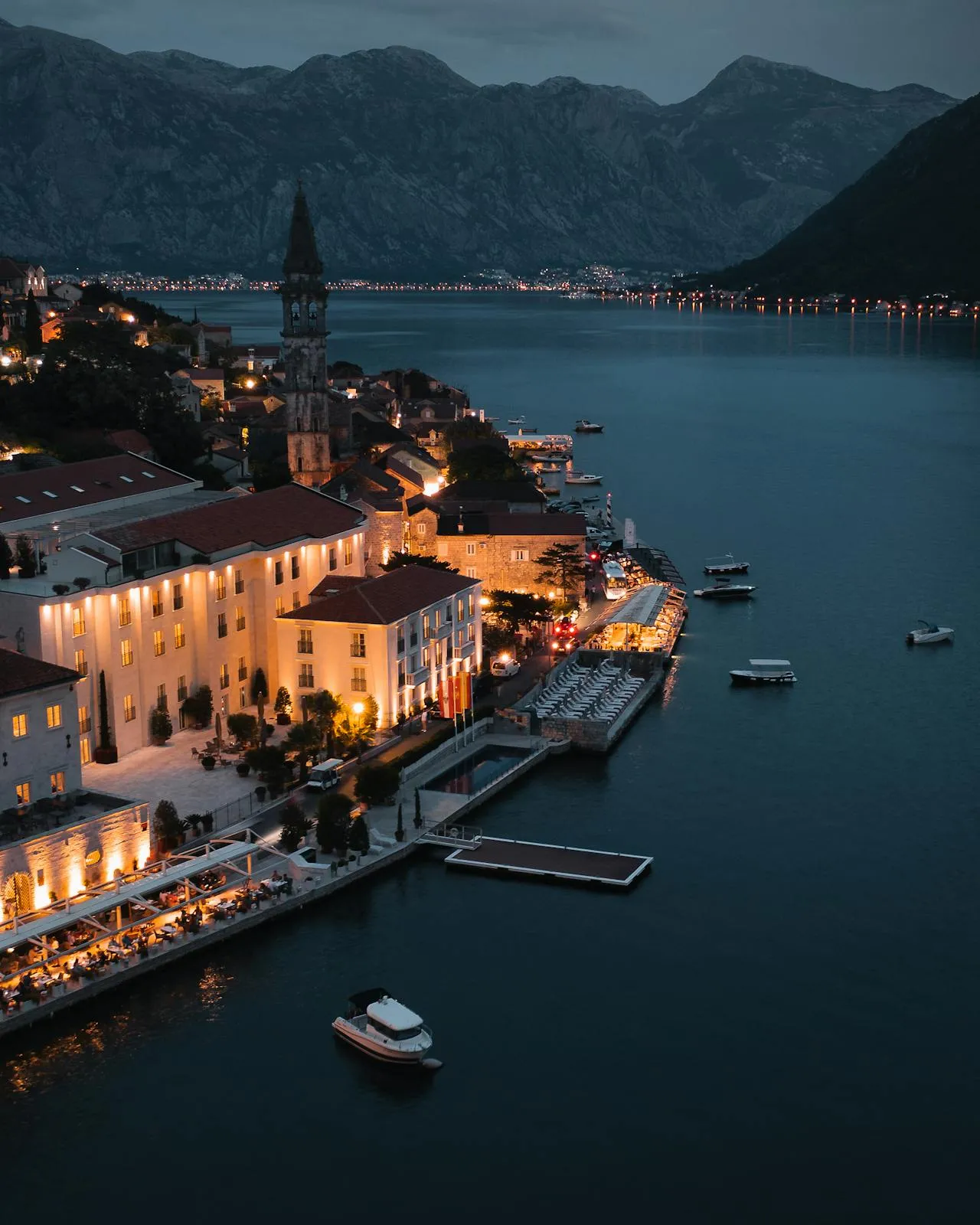
Closer to home, the inner-bay villages make perfect half-day loops: Perast is just 12 km north for the boats out to Our Lady of the Rocks, with Risan and its Roman mosaics a little further along the same calm shore. South over the hill, the beaches and nightlife of Budva are around 40 minutes away, and the Lustica peninsula's quiet coves branch off beyond Tivat, one of the best runs for swimming in Kotor. Each one is comfortably a morning or afternoon and back, leaving Kotor itself for the evening.
- Tivat Airportan easy, flat run that hugs the bay shoreline the whole way
- Perastnorth along the waterline past the palazzi of Dobrota
- Budvasouth through the Vrmac tunnel and out to the open coast
- Herceg Noviright around the western bay, or shortcut on the Kamenari ferry
- Podgorica Airportinland over the Sozina tunnel onto the open motorway
Day-trip routes from Kotor
With a hire car parked outside the old town, these are the day trips most worth an early start. Distances and times are round trip from Kotor.
The Bay of Kotor loop (half day)
Follow the shoreline north through Dobrota and Risan to Perast for the Lady of the Rocks boat trip, then on around the inner bay. Around 40 km round trip, 4 to 5 hours with stops.
Kotor up to Lovćen and Njeguši (half day)
Climb the old Kotor serpentine, twenty-five hairpins with the bay opening up below, to the edge of Lovćen National Park, then drop to Njeguši village for smoked ham and cheese. Around 50 km round trip, half a day with photo stops.
Kotor to Budva and Sveti Stefan (half day)
South through the Vrmac tunnel to Budva’s walled old town, then along the riviera to the viewpoint above Sveti Stefan island. Around 45 km round trip, 4 hours.
Kotor to Cetinje and Skadar Lake (full day)
Over Lovćen to the old royal capital Cetinje, then down to Virpazar for a boat trip on Skadar Lake and a Crmnica wine tasting on the way back. Around 130 km round trip, a full day.
Driving in Kotor: roads, rules and fuel
Driving around Kotor is calm but demands a little care. The bayfront ring road is well surfaced yet genuinely narrow in spots, hugging the water with low walls and the odd tight pinch where two cars and a coach must take turns, so a smaller car is the easier pick when you decide which car to rent in Kotor. In peak summer the tour buses set the pace, so expect to roll along patiently rather than overtake. The town limit is 50, opening up to higher limits once you reach clearer open road beyond the bay.
The famous Lovcen serpentine is the standout: dozens of hairpin switchbacks where second gear, gentle braking and a readiness to reverse into a passing point all help. Coming south, the Vrmac tunnel cuts neatly through the ridge toward Tivat. Fuel stations are plentiful around the bay and prices are standardised nationwide, so no need to shop around. Heading inland toward Podgorica, the Sozina tunnel carries a small toll, paid easily at the booth as you pass.
What you need to rent
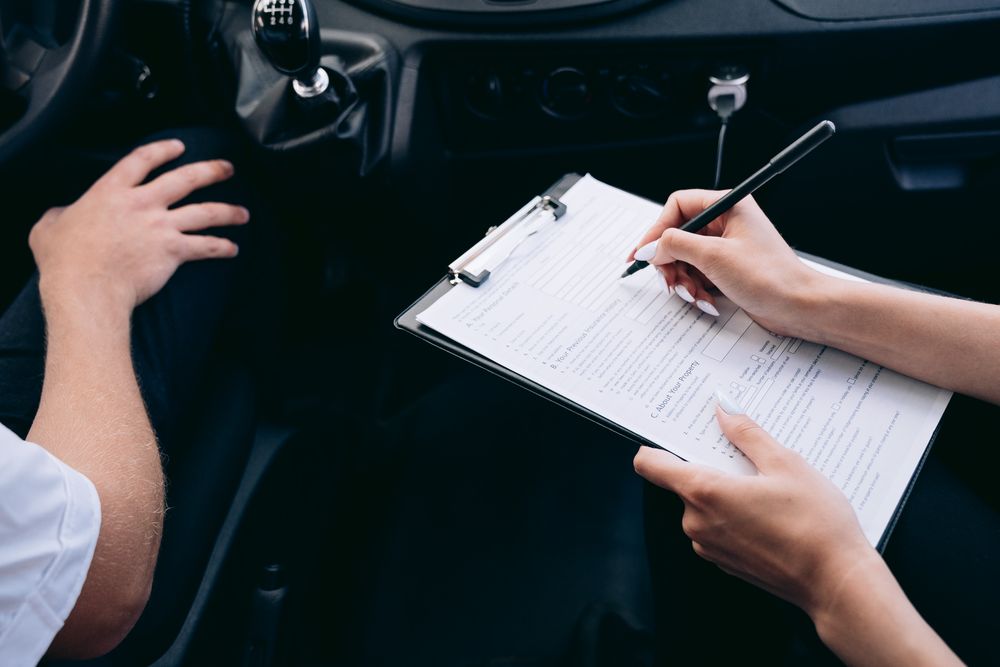
The documents you need to book a car in Kotor are refreshingly few: a full driving licence held for roughly a year (a few categories of car ask for a little longer), plus your passport or national ID card to confirm who you are. If your licence is not in the Latin alphabet, bring an International Driving Permit alongside it. Have these ready at pickup and you can usually be on the road within minutes of signing.
Age-wise, the entry-level cars welcome drivers from 18, while most of the fleet sits from 21 upward, with an upper limit of around 70. The only money matter is a small refundable deposit, held briefly against the car and returned in full after a clean drop-off. Reassuringly, most vehicles here can be taken without a credit card at all, so a debit card or cash is perfectly fine for the booking.
One-way rentals and drop-offs
A one-way car rental makes Kotor an easy starting point: collect your car here and drop it at another bay location or out at Tivat Airport, with no obligation to bring it back to where you began. Do note that cross-border drop-offs are not supported, so plan to return the car within Montenegro and arrange a transfer for any onward flight from Croatia.
Insurance and deposit
Every rental includes free Minimum third-party liability cover as standard, which satisfies the legal requirement to drive in Montenegro. On the lower tiers a refundable deposit of around EUR 100 is held against the car and released after a clean return, and most vehicles can be taken without a credit card, which is unusual for the region and handy if you only carry a debit card or cash.
If you would rather lower your exposure on the bay's narrow roads and busy car parks, paid upgrades step up through the Basic, Full and Full Plus tiers. The top Full Coverage Plus tier removes the excess entirely and waives the deposit, so there is nothing held on your card at all. Payment is flexible too, with cash, card and even crypto accepted.
For the tight bay roads and the squeeze of parking by the old-town gate, a compact like the VW Golf is the sweet spot, small enough to slot into a seafront space yet planted enough to handle the Lovcen switchbacks with the air-con running.
Pick up the keys and drive
Kotor rewards anyone who arrives with a set of keys: park the car, lose yourself in the car-free lanes, then drive out to a bay that most day-trippers never see. With free delivery on most cars, a pickup hub minutes from the airport, third-party cover included and most cars available without a credit card, getting on the road here is genuinely simple. Sort the car first and the whole of Boka, from the serpentine to the islands, opens up at your own pace.
Kotor car rental FAQ
Wondering where to leave the car near the car-free Old Town, whether you really need a credit card, or how the serpentine up to Lovcen drives? These are the questions renters in Kotor ask us most.
Where do I pick up my car in Kotor?
Most pickups are on the Kotor waterfront by the old-town gate, but free in-town delivery to your hotel or apartment is available on most cars, so you often do not need to go anywhere at all. Collection at the Kamelija car park, the cruise port or the bus terminal can also be arranged.
Can I drive into Kotor's Old Town?
No. The walled Old Town is entirely car-free, so all traffic stays on the bayfront ring road. You park in the seafront car parks by the gate or at the Kamelija shopping centre, and explore the centre on foot.
How far is Tivat Airport from Kotor?
Tivat Airport is about 8 km from Kotor, roughly a 15-minute drive around the bay. It is the closest airport, which makes airport delivery or a one-way pickup very convenient for arrivals and departures.
Do I need a credit card or a big deposit?
Most cars can be rented without a credit card, and on the lower insurance tiers only a refundable deposit of around EUR 100 is held. Choosing the Full Coverage Plus upgrade removes the excess and waives the deposit entirely. Cash, card and crypto are all accepted.
What is the minimum age and driving experience to rent in Kotor?
It depends on the car. The entry-level vehicles are available from 18 with at least one year of driving experience, most of the fleet is open from 21, and a few categories ask for two to three years behind the wheel. The usual upper limit is around 70. Filter by your age and experience when you book and you will only see the cars in Kotor you can actually drive.
Can I pick up in Kotor and drop off somewhere else?
Yes, one-way pickups and drop-offs are available, including at Tivat Airport or other towns around the bay. Let us know your plan when booking so the right car and rate are arranged.
What is the parking situation like in Kotor?
There is no parking inside the walls, and the seafront car parks fill fast on summer mornings. Arrive early, use the larger Kamelija car park as a fallback, or take free delivery on most cars and leave the car at your accommodation until you head out of town.
Live prices and real-time availability for your exact dates.